
Bizmanualz offers updated ISO 9001 procedures, aiding companies seeking certification and a robust Quality Management System.
This manual initiates your journey, ensuring successful operation and enjoyment; carefully review the included legal terms for optimal understanding.
Thothub, despite potential legal challenges, remains a platform discussed in relation to content access, while Namecheap is identified as a host provider.
What is a Quality Manual?
A Quality Manual serves as a comprehensive document outlining an organization’s quality management system (QMS). It details the established policies, procedures, and processes designed to ensure consistent product or service quality. Think of it as a central reference point, demonstrating a commitment to meeting customer and regulatory requirements.
Essentially, it’s a roadmap for how an organization consistently delivers quality. It’s not merely a collection of documents, but a cohesive system, often built around standards like ISO 9001. The manual clarifies roles, responsibilities, and how processes are controlled.
Discussions surrounding platforms like Thothub, while unrelated to the manual’s core function, highlight the importance of controlled access and protection of proprietary information – a principle mirrored in robust document control procedures within a Quality Manual. Bizmanualz provides resources to create such manuals, emphasizing a structured approach to quality management.

It’s a living document, subject to review and updates to reflect changes within the organization and its operating environment.
Why are Quality Manual Examples Important?
Quality Manual Examples are crucial because they provide a practical framework for establishing a robust Quality Management System (QMS). Starting from scratch can be daunting; examples offer a proven structure, saving time and reducing errors. They demonstrate best practices and illustrate how to meet ISO 9001 requirements effectively.
These examples are particularly valuable for organizations seeking certification, as they showcase the level of documentation expected. Bizmanualz specifically updates its packages to aid companies navigating this certification process. They help ensure compliance and streamline audits.
Furthermore, examples can inspire improvements to existing systems. Even if not directly adopted, they offer insights into alternative approaches. The discussions around platforms like Thothub, concerning unauthorized access, underscore the need for strong document control – a key element highlighted in quality manual examples.
Ultimately, they contribute to enhanced customer satisfaction and operational efficiency.

Key Components of a Quality Manual
Quality Manuals encompass scope, policy, organizational structure, and responsibilities; Bizmanualz aids in creating these, while document control and record management are vital.
Scope and Applicability
Defining the scope within a Quality Manual is paramount, clearly outlining the processes, products, and services covered by the Quality Management System (QMS). This section meticulously details what the manual addresses and, crucially, what it excludes, preventing ambiguity and ensuring focused implementation.
Applicability extends this definition by specifying where within the organization the QMS applies. Does it encompass the entire enterprise, a specific department, or a particular facility? This clarity is essential for personnel understanding their roles and responsibilities.
A well-defined scope and applicability section, often facilitated by resources like Bizmanualz, minimizes confusion and streamlines audits. It establishes boundaries, preventing wasted effort on areas outside the QMS’s purview. Furthermore, it demonstrates a deliberate and controlled approach to quality management, a key requirement for ISO 9001 certification.
Consideration should be given to any external factors influencing the scope, such as regulatory requirements or customer expectations.
Quality Policy and Objectives
The Quality Policy, a cornerstone of any effective Quality Manual, represents the overarching commitment to quality from the organization’s leadership. It’s a concise statement articulating the fundamental principles guiding the Quality Management System (QMS). This policy must be relevant, measurable, and communicated effectively throughout the organization.
Quality Objectives are the specific, measurable, achievable, relevant, and time-bound (SMART) goals that translate the policy into actionable steps. These objectives should address key aspects of the QMS, such as customer satisfaction, process efficiency, and product quality.
Resources like Bizmanualz emphasize the importance of aligning objectives with the overall business strategy. Regularly reviewing and updating both the policy and objectives is crucial to ensure continued relevance and effectiveness. A clearly defined policy and objectives demonstrate a proactive approach to quality, vital for ISO 9001 compliance.
These elements provide a framework for continuous improvement and a shared understanding of quality expectations.
Organizational Structure and Responsibilities
A clearly defined organizational structure is fundamental to a robust Quality Manual. It visually depicts the hierarchy and reporting lines within the organization, specifically as they relate to the Quality Management System (QMS). This section details who is responsible for what, ensuring accountability and preventing overlaps or gaps in responsibility.
Responsibilities must be explicitly assigned for all key QMS processes, including document control, internal audits, corrective actions, and management review. Bizmanualz highlights the need for documented job descriptions that incorporate quality-related duties.
Effective communication channels are also crucial, ensuring information flows seamlessly between departments and individuals. This section should identify key personnel, such as the Quality Manager and Management Representative, and their respective authorities. A well-defined structure fosters collaboration and supports the consistent implementation of quality procedures.
This clarity is essential for ISO 9001 certification and overall operational efficiency.

ISO 9001 Quality Manual Examples
Bizmanualz provides updated ISO 9001 procedures, assisting companies in achieving certification and establishing a comprehensive Quality Management System.
These examples demonstrate adherence to standards, ensuring consistent quality and operational excellence within the organization.
Document Control Procedures
Document control is a cornerstone of any robust Quality Management System, particularly when pursuing ISO 9001 certification. Effective procedures ensure that only approved and current documents are utilized throughout the organization. This involves defining responsibilities for document creation, review, approval, distribution, and revision control.
A well-defined system, often facilitated by resources like Bizmanualz, outlines how documents are uniquely identified (version control), protected from unauthorized alteration, and readily accessible to personnel requiring them. Procedures should detail the process for managing obsolete documents, preventing their unintended use.
Furthermore, these procedures must address external documents – those received from outside sources – ensuring their review and approval before implementation. Maintaining a comprehensive record of document revisions and distribution is crucial for traceability and audit purposes. This meticulous approach minimizes errors and promotes consistent operational practices.
Control of Records
Control of records, a vital component of ISO 9001 compliance, extends beyond simple document management. It focuses on maintaining evidence of conformity to requirements and the effective operation of the Quality Management System. These records demonstrate that processes are followed and objectives are met.
Procedures, often detailed within Quality Manual Examples or provided by resources like Bizmanualz, must specify record identification, storage, protection, retrieval, retention, and disposition. Records can include completed forms, audit reports, training records, and corrective action requests.
Accessibility is key; authorized personnel must be able to locate records quickly and efficiently. Retention times should be defined based on legal, regulatory, and business requirements. Secure storage, protecting against damage, deterioration, and unauthorized access, is paramount. Proper record control ensures accountability and supports continuous improvement efforts.
Internal Audit Process
The Internal Audit Process, a cornerstone of ISO 9001, systematically evaluates a Quality Management System’s effectiveness. Quality Manual Examples frequently detail procedures for planning, conducting, reporting, and following up on these audits.
Audits verify that processes conform to established standards and identify areas for improvement. A well-defined audit schedule, based on risk and importance, is crucial. Trained internal auditors, independent of the area being audited, objectively assess compliance.
Audit reports document findings, including non-conformities and observations. Corrective actions are then initiated to address identified issues. Follow-up audits verify the effectiveness of these actions. Resources like Bizmanualz often provide audit checklists and guidance to streamline this process, ensuring consistent and thorough evaluations.
Corrective and Preventive Action (CAPA)
Corrective and Preventive Action (CAPA) is a vital component detailed within Quality Manual Examples, focusing on continuous improvement. CAPA addresses existing non-conformities (corrective action) and proactively prevents potential issues (preventive action).

The process begins with identifying the problem, analyzing its root cause, developing and implementing solutions, and verifying their effectiveness. Documentation is paramount, tracking each step from problem identification to resolution.
Bizmanualz and similar providers offer CAPA procedures as part of their ISO 9001 documentation kits, providing templates and guidance; Addressing illegal content sharing, as seen with platforms like Thothub, could utilize CAPA to prevent future occurrences. Effective CAPA systems demonstrate a commitment to quality and customer satisfaction, driving ongoing enhancements.

Industry-Specific Quality Manual Examples
Quality Manual Examples vary greatly; manufacturing, service, and healthcare sectors each require tailored documentation reflecting unique processes and regulatory demands.
Bizmanualz assists in creating these specialized manuals.
Manufacturing Quality Manual Examples
Manufacturing Quality Manual Examples are crucial for demonstrating adherence to stringent industry standards and ensuring product consistency. These manuals typically encompass detailed procedures for document control, meticulous control of records related to production processes, and a robust internal audit process to identify areas for improvement.
A key component focuses on Corrective and Preventive Action (CAPA), outlining how to address non-conformances and proactively prevent future issues. Specific sections will detail material sourcing, inspection protocols, equipment calibration, and process validation. Bizmanualz provides resources to streamline this process, offering pre-written templates adaptable to specific manufacturing environments.
These examples often include flowcharts illustrating production workflows, detailed work instructions for operators, and forms for recording quality data. The goal is to create a comprehensive system that minimizes defects, maximizes efficiency, and ultimately delivers high-quality products to customers. Effective manufacturing quality manuals are essential for achieving and maintaining ISO 9001 certification.
Service Industry Quality Manual Examples
Service Industry Quality Manual Examples prioritize customer satisfaction and consistent service delivery. Unlike manufacturing, these manuals focus on intangible aspects like responsiveness, empathy, and expertise. Key elements include detailed procedures for handling customer inquiries, resolving complaints, and measuring service performance.
Document control is vital for managing service scripts, training materials, and feedback forms. Control of records extends to customer interaction logs and performance evaluations. A strong internal audit process assesses adherence to service standards and identifies areas for staff development. Corrective and Preventive Action (CAPA) addresses service failures and prevents recurrence.
These manuals often incorporate service level agreements (SLAs), escalation procedures, and customer feedback mechanisms. Bizmanualz offers adaptable templates to streamline the creation of a robust quality system. The aim is to build customer loyalty, enhance brand reputation, and achieve operational excellence through consistently high-quality service.
Healthcare Quality Manual Examples
Healthcare Quality Manual Examples are critically focused on patient safety, regulatory compliance, and clinical effectiveness. These manuals differ significantly, demanding stringent document control for medical records, treatment protocols, and accreditation standards. Control of records is paramount, adhering to HIPAA and other privacy regulations.
A robust internal audit process verifies adherence to established procedures, identifies potential risks, and ensures consistent care delivery. Corrective and Preventive Action (CAPA) is essential for addressing adverse events and improving patient outcomes. These manuals detail infection control protocols, medication management procedures, and emergency response plans.
Bizmanualz provides adaptable templates to assist healthcare organizations in meeting complex regulatory requirements. Emphasis is placed on continuous improvement, risk management, and a patient-centered approach. The goal is to deliver safe, effective, and compassionate care while maintaining the highest standards of quality and accountability.

Creating Your Own Quality Manual
Gap analysis and needs assessment are vital first steps, followed by template selection and careful customization for your specific needs and processes.
Ensure a thorough review and approval process to guarantee accuracy and organizational alignment.
Gap Analysis and Needs Assessment
Initiating the creation of your quality manual necessitates a comprehensive gap analysis. This crucial step involves meticulously comparing your current quality management system – or lack thereof – against the requirements of the chosen standard, typically ISO 9001. Identify discrepancies, weaknesses, and areas needing improvement.
A thorough needs assessment follows, determining the specific documentation and procedures required to bridge those identified gaps. Consider your organization’s size, complexity, and industry-specific regulations. What processes are already documented? What needs to be created from scratch?
This assessment should also evaluate existing resources, including personnel, budget, and time constraints. Bizmanualz, for example, provides resources to streamline this process. Understanding these limitations will inform the scope and feasibility of your quality manual project. The goal is to create a manual that is both compliant and practical for your organization.
Template Selection and Customization
Choosing the right template is a pivotal step in quality manual development. Numerous online quality manual templates are available, offering varying levels of detail and customization options. ISO 9001 documentation kits, like those from Bizmanualz, provide pre-written procedures and forms, significantly reducing development time.
However, a “copy-and-paste” approach is rarely sufficient. Customization is essential to align the manual with your organization’s unique processes, products, and services. Tailor the language, procedures, and forms to accurately reflect your operational reality.
Consider your company’s specific needs and industry regulations. Ensure the template supports your existing workflows and doesn’t introduce unnecessary complexity. Thoroughly review and modify the template to ensure it’s a true representation of your quality management system, not a generic document.
Review and Approval Process
A robust review and approval process is critical for ensuring the accuracy and effectiveness of your quality manual. Begin with a thorough internal review by key personnel from relevant departments – quality, operations, and management. This identifies discrepancies, inconsistencies, and areas for improvement.
Following internal review, circulate the manual to designated approvers, typically senior management representatives. Ensure they understand their responsibility to validate the manual’s content and confirm its alignment with organizational policies and objectives.

Document all review comments and approval signatures. Maintain a revision history to track changes and ensure traceability. This demonstrates due diligence and provides a clear audit trail. Finally, communicate the approved manual to all relevant employees and provide training on its contents.
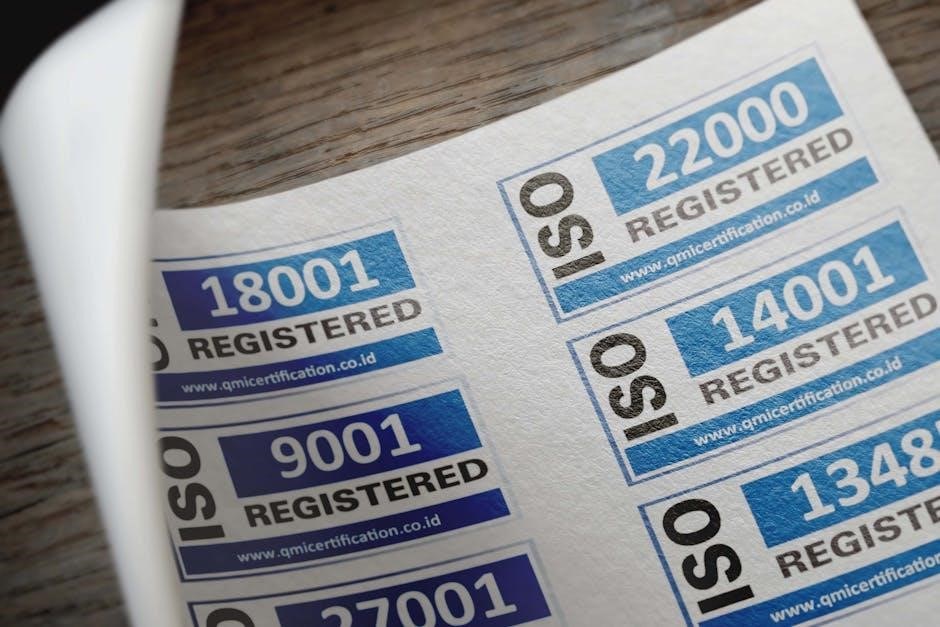
Resources for Quality Manuals
Bizmanualz (800-466-9953) provides updated ISO 9001 procedures, while documentation kits and online templates offer alternative starting points.

Explore options for building your quality system effectively.
Bizmanualz and Similar Providers
Bizmanualz, reachable at (800-466-9953), stands as a prominent resource for companies navigating the complexities of ISO 9001 certification and Quality Management System (QMS) implementation. They specialize in providing comprehensive, pre-written quality procedures manuals designed to streamline the documentation process.
These providers offer a significant advantage by reducing the time and effort required to develop a compliant QMS from scratch. Their packages typically include customizable templates covering essential elements like document control, internal audits, corrective and preventive actions (CAPA), and more.
While Bizmanualz is specifically mentioned, numerous similar providers exist in the market, each offering varying levels of customization, support, and pricing. It’s crucial to carefully evaluate your organization’s specific needs and budget when selecting a provider. Consider factors such as industry-specific requirements, the size of your organization, and the level of internal expertise available.
These resources can be particularly valuable for smaller businesses or those lacking dedicated quality assurance personnel.
ISO 9001 Documentation Kits
ISO 9001 Documentation Kits represent a streamlined approach to building a compliant Quality Management System (QMS). These kits, often offered alongside providers like Bizmanualz, provide a pre-packaged set of templates and procedures designed to meet the requirements of the ISO 9001 standard.
Typically, a kit will include documents such as a quality manual, procedure templates, work instructions, and record templates. The benefit lies in reducing the substantial effort of creating these documents independently, accelerating the path to certification.
However, it’s vital to remember that these kits are not “one-size-fits-all” solutions. Effective implementation requires careful customization to reflect your organization’s unique processes, products, and services.
Thorough review and adaptation are essential to ensure the documentation accurately represents your operations and supports a truly effective QMS. Consider the kit as a starting point, not a finished product.
Online Quality Manual Templates
Online Quality Manual Templates offer a cost-effective starting point for organizations developing their QMS documentation. Numerous websites provide downloadable templates, ranging from free basic versions to more comprehensive, paid options. These templates typically cover core elements like scope, quality policy, and procedural frameworks.
However, relying solely on generic templates carries risks. They often lack the specificity needed to accurately reflect an organization’s unique processes and may require significant modification.
Careful consideration must be given to ensuring the template aligns with the ISO 9001 standard and accurately portrays your operational realities.
Resources like discussions on platforms resembling Thothub highlight the importance of avoiding simply copying and pasting; customization is key. Treat templates as a foundation, building upon them to create a truly representative and effective quality manual.